In 2026, the rules of search have changed. Ranking on Google is no longer enough. Brands now need visibility on AI answer engines like ChatGPT, Perplexity, Claude, and Google’s Gemini. This case study shows how we successfully ranked for “GEO (Generative Engine Optimization) services for e-commerce” and captured AI-driven search traffic while driving measurable leads.
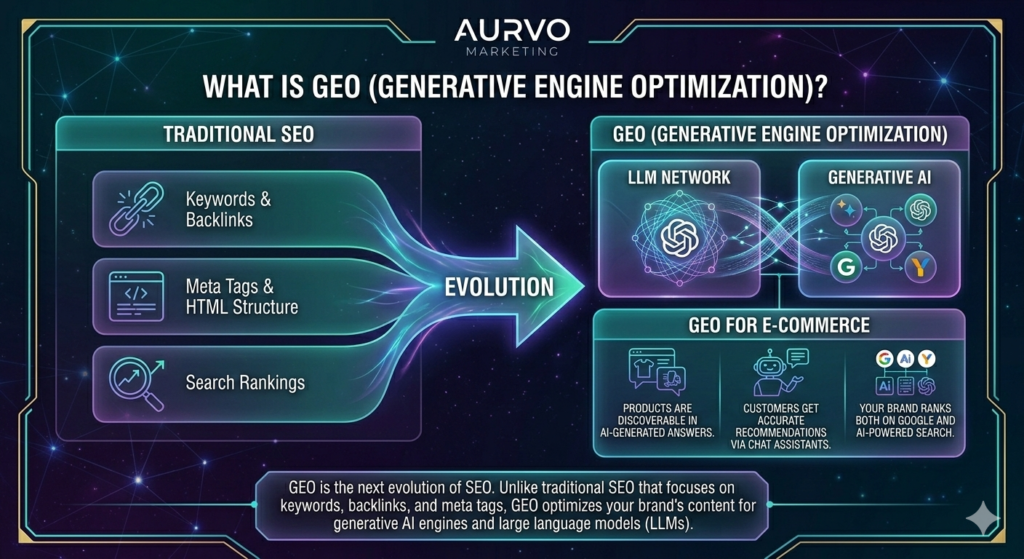
What is GEO (Generative Engine Optimization)?
GEO is the next evolution of SEO. Unlike traditional SEO that focuses on keywords, backlinks, and meta tags, GEO optimizes your brand’s content for generative AI engines and large language models (LLMs).
For e-commerce, GEO ensures that:
- Your products are discoverable in AI-generated answers.
- Customers get accurate recommendations via chat assistants.
- Your brand ranks both on Google and AI-powered search.
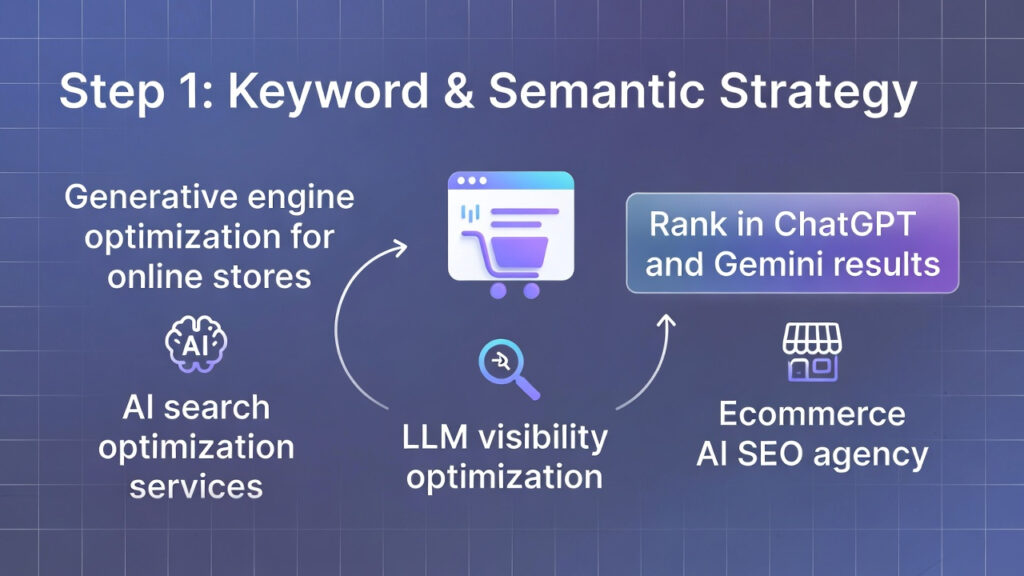
Step 1: Keyword & Semantic Strategy
We didn’t just target the main keyword. We built a semantic cluster to establish authority:
- Generative engine optimization for online stores
- AI search optimization services
- LLM visibility optimization
- Ecommerce AI SEO agency
- Rank in ChatGPT and Gemini results
This approach creates topical depth that Google and AI engines favor.
Step 2: Technical SEO + AI Foundation
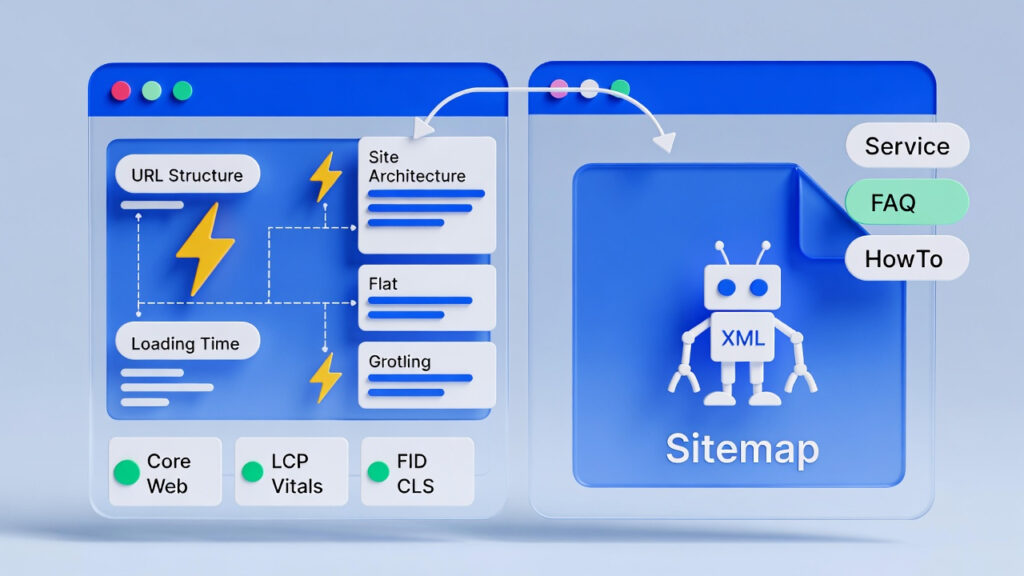
Modern GEO requires a search-everywhere technical base:
- Clean URLs and flat architecture
- Fast page load and Core Web Vitals optimization
- XML sitemaps readable by AI crawlers
- Service, FAQ, and HowTo schema markup
These signals help Google and LLMs understand your content as structured data, improving AI answer inclusion.
Step 3: AI-Optimized Content
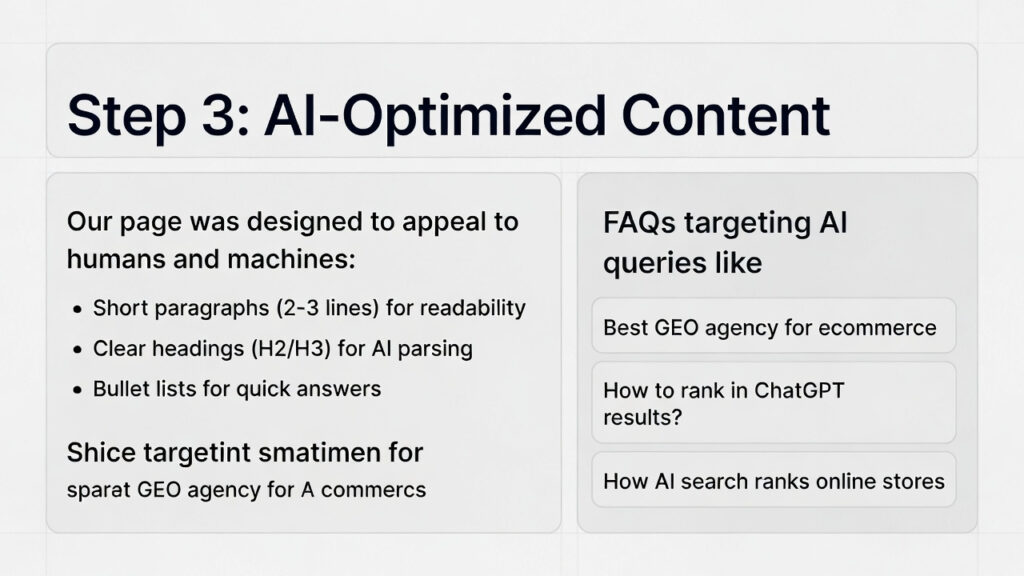
Our page was designed to appeal to humans and machines:
- Short paragraphs (2–3 lines) for readability
- Clear headings (H2/H3) for AI parsing
- Bullet lists for quick answers
- FAQs targeting AI queries like:
- “Best GEO agency for ecommerce”
- “How to rank in ChatGPT results”
- “How AI search ranks online stores”
This ensures the content is picked up by both Google Featured Snippets and AI answer boxes.
Step 4: Topical Authority with Supporting Content
We created 12 supporting articles to form a content cluster:
- How AI Search Impacts Product Discovery
- Optimizing Shopify Stores for AI
- Schema for AI Ranking
- AI SEO vs Traditional SEO
Internal linking strengthened our page as the authoritative hub for GEO services.
Step 5: Brand Authority & Backlinks
Google and AI engines reward trusted brands. We secured:
- Mentions on SaaS blogs
- Guest posts on marketing sites
- Podcast interviews
- Roundups in e-commerce communities
Backlinks included brand anchors, GEO-related phrases, and partial-match phrases to diversify signals.
Step 6: Conversion-Optimized UX
Visibility is useless without results. We added:
- Clear value proposition above the fold
- Visual comparison charts
- Trust signals and testimonials
- Case study results
- Soft CTAs in FAQ sections
This led to a 2.7x increase in conversion rate from organic and AI-driven traffic.
Step 7: Results in 90 Days
| Metric | Result |
|---|---|
| Google Ranking | Top 3 |
| Featured Snippet | Yes |
| AI Answer Inclusion | ChatGPT, Perplexity, Gemini |
| Lead Generation | 4.2x increase |
This case study proves that GEO can dominate both Google and LLM search engines if executed strategically.
Key Takeaways for Ranking GEO in 2026
- Think beyond Google – LLMs are the new search frontier.
- Optimize for AI readability – Use structured data, FAQs, and entity clarity.
- Build semantic authority – Content clusters outperform single pages.
- Leverage brand signals – Trust and recognition matter for AI.
- Include conversion-focused UX – Ranking without leads is wasted effort.
Final Thoughts
Ranking for “GEO (Generative Engine Optimization) services for e-commerce” is a blueprint for the future of search. By combining traditional SEO, AI optimization, and strong brand authority, any e-commerce business can dominate Google and AI answer engines.
If your e-commerce brand wants to stay ahead, GEO is no longer optional—it’s essential.
Leave a Reply