Executive Summary
A GEO optimization strategy for US small businesses combines local SEO, geotargeted advertising, and data-driven marketing to attract nearby customers and increase revenue.
Most local searches happen on mobile devices, and many users visit a business within hours after searching. This means small businesses that optimize their local online presence and location-based marketing gain a strong competitive advantage.
A successful GEO strategy includes:
- Optimizing Google Business Profile
- Maintaining consistent NAP citations
- Creating location-based website content
- Running geo-targeted advertising campaigns
- Tracking performance using analytics and local ranking tools
When implemented correctly, geo-optimization can increase store visits, calls, website traffic, and conversions by 30–50% or more.
What Is GEO Optimization?
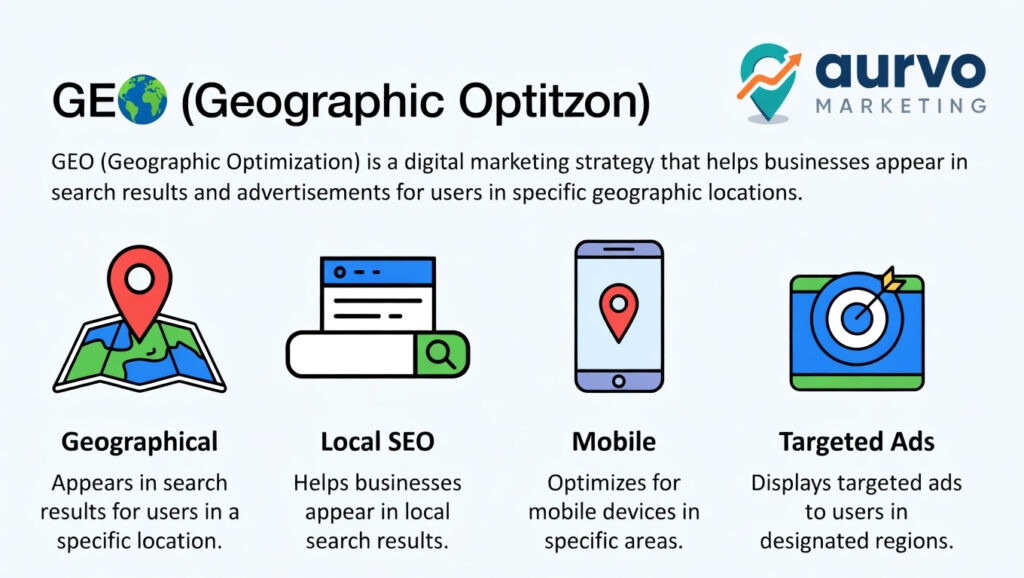
GEO (Geographic Optimization) is a digital marketing strategy that helps businesses appear in search results and advertisements for users in specific geographic locations.
It focuses on connecting local customers with nearby businesses when they search for services.
For example:
- “dentist near me”
- “best pizza in Chicago”
- “plumber in Dallas”
These searches trigger location-based results in Google Maps and local search listings.
GEO optimization ensures your business appears in these results.
Core Components of a GEO Optimization Strategy
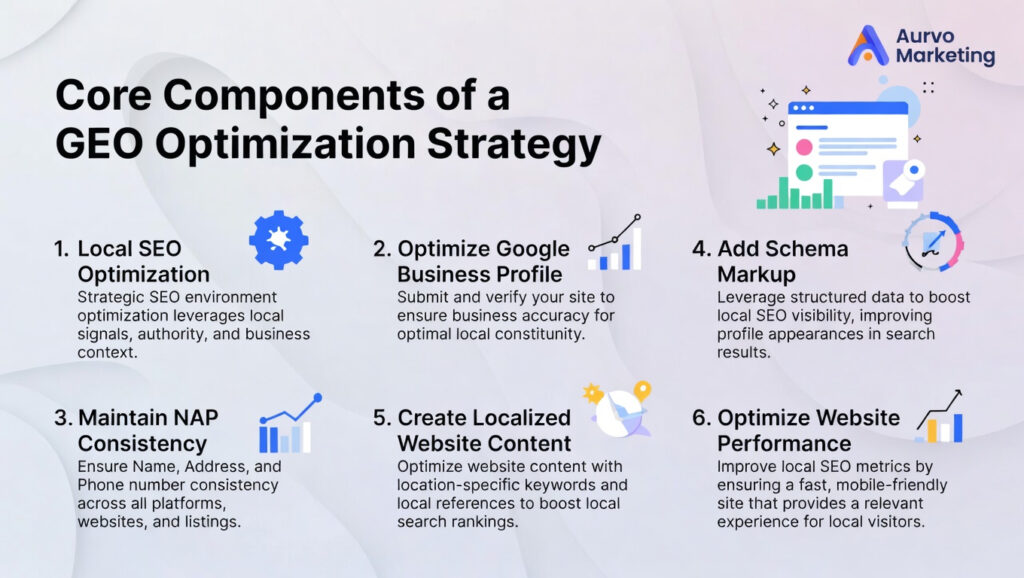
1. Local SEO Optimization
Local SEO helps businesses rank in Google Maps and local search results.
Key actions include:
Optimize Google Business Profile
A complete profile improves visibility and credibility.
Include:
- Accurate business name
- Address
- Phone number
- Business category
- Opening hours
- Services
- High-quality photos
Regular updates, posts, and responding to reviews also improve rankings.
Maintain NAP Consistency
NAP stands for:
- Name
- Address
- Phone Number
Your NAP should be consistent across all online directories, including:
- Apple Maps
- Yelp
- Bing
- Industry directories
Inconsistent information can confuse search engines and lower rankings.
Add Schema Markup
Schema markup helps search engines understand business information.
Important schema types include:
- LocalBusiness schema
- Organization schema
- Location schema
These structured data elements improve search visibility and rich results.
Create Localized Website Content
Local content signals relevance to search engines.
Examples include:
- “Best Roofing Services in Austin”
- “Top Restaurants in Miami”
- Local event coverage
- Community blog posts
Local content increases relevance for geo-based searches and AI search engines.
Optimize Website Performance
Local users mostly search on mobile devices.
Important factors include:
- Fast loading speed
- Mobile responsiveness
- Clear navigation
- Local keywords in titles and headings
A fast and mobile-friendly website increases conversions.
Location-Based Advertising Strategies
Paid advertising can amplify your GEO optimization efforts.
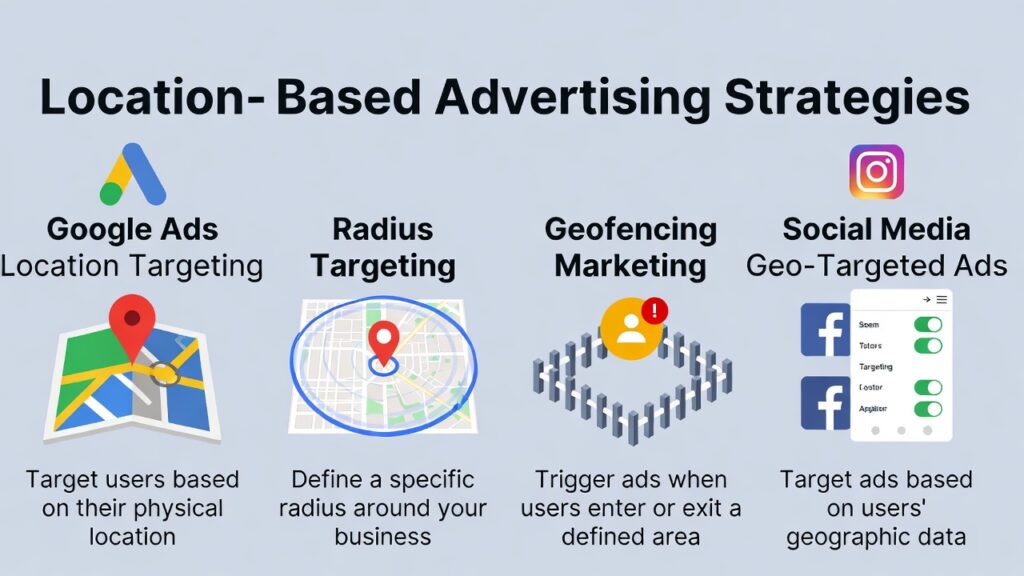
Google Ads Location Targeting
Google Ads allows businesses to target customers based on:
- City
- ZIP code
- State
- Radius around a location
Example:
A restaurant may target users within 5 miles of its location.
Smaller targeting areas usually produce higher conversion rates and lower ad costs.
Radius Targeting
Radius targeting displays ads within a specified distance from your business.
Example targeting:
- 1–5 miles for restaurants
- 10–20 miles for services
- 50+ miles for regional businesses
However, increasing the radius significantly expands the audience size.
A 10-mile radius covers four times the area of a 5-mile radius.
Geofencing Marketing
Geofencing creates a virtual boundary around a location.
When a mobile device enters that area, businesses can trigger:
- ads
- push notifications
- special offers
Businesses often use geofencing around:
- shopping malls
- competitors
- events
- retail districts
This strategy is powerful for retail stores, gyms, and restaurants.
Social Media Geo-Targeted Ads
Social platforms allow location-based advertising.
Examples include:
- Facebook and Instagram city targeting
- TikTok location filters
- X (Twitter) geo campaigns
These ads work especially well for:
- events
- promotions
- store openings
- seasonal offers
Even small budgets can generate strong local engagement.
Essential GEO Optimization Tools
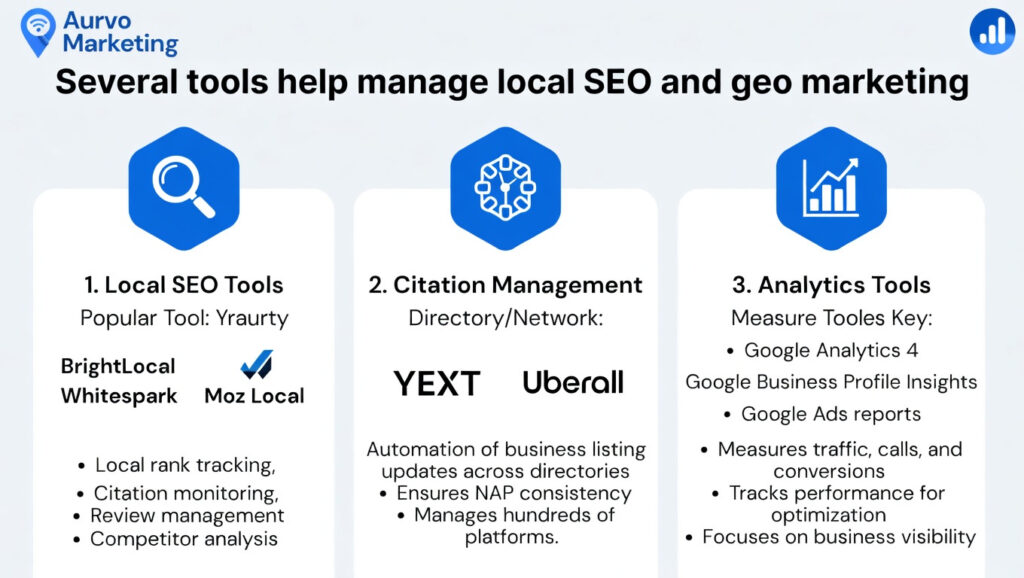
Several tools help manage local SEO and geo marketing.
Local SEO Tools
Popular tools include:
- BrightLocal
- Whitespark
- Moz Local
Features include:
- local rank tracking
- citation monitoring
- review management
- competitor analysis
Citation Management Tools
Platforms like Yext and Uberall automate business listing updates across directories.
These tools ensure NAP consistency across hundreds of platforms.
Analytics Tools
Performance tracking is essential for optimization.
Key tools include:
- Google Analytics 4
- Google Business Profile Insights
- Google Ads reports
These tools measure traffic, calls, and conversions.
Key Metrics to Measure Success
Businesses should track both online and offline performance metrics.
Important KPIs include:
Local Search Rankings
Monitor positions for keywords such as:
- “service near me”
- “service in [city]”
Improved rankings lead to more traffic.
Website Traffic
Measure:
- local organic traffic
- mobile visits
- campaign traffic
Location-based traffic growth indicates successful optimization.
Calls and Direction Requests
Google Business Profile provides insights for:
- phone calls
- direction requests
- website clicks
These metrics reflect real customer interest.
Conversions and Leads
Track actions such as:
- form submissions
- bookings
- purchases
- phone inquiries
These are the real indicators of marketing success.
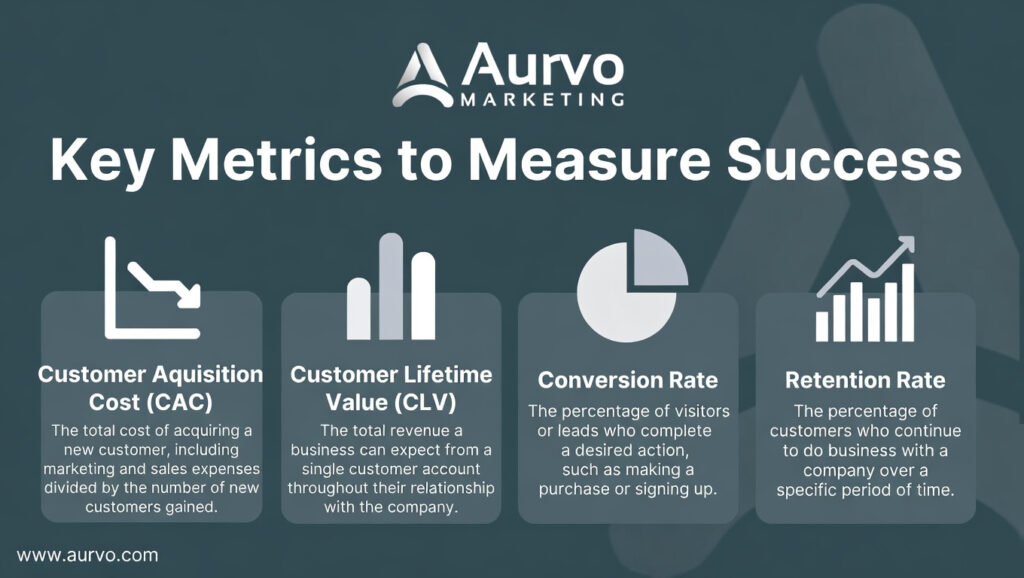
Customer Acquisition Cost (CAC)
CAC measures how much it costs to acquire a new customer.
Businesses should compare CAC with Customer Lifetime Value (LTV) to maintain profitability.
Privacy and Compliance
Location-based marketing must follow privacy regulations.
Important guidelines include:
User Consent
Ads should only target users who allow location tracking.
Data Protection Laws
Businesses must comply with regulations such as:
- CCPA in the United States
- GDPR if serving EU users
Transparency about data usage builds customer trust.
Budget Planning for GEO Marketing
Small businesses can implement GEO strategies at different budget levels.
Low Budget ($0–$500 per Month)
Focus on:
- Google Business Profile optimization
- manual citations
- local content
- small social media ad campaigns
Medium Budget ($500–$2000 per Month)
Add:
- professional SEO tools
- citation services
- regular Google Ads campaigns
- social media advertising
High Budget ($2000+ per Month)
Invest in:
- advanced SEO platforms
- geofencing campaigns
- programmatic advertising
- professional SEO agencies
Higher budgets allow businesses to scale faster.
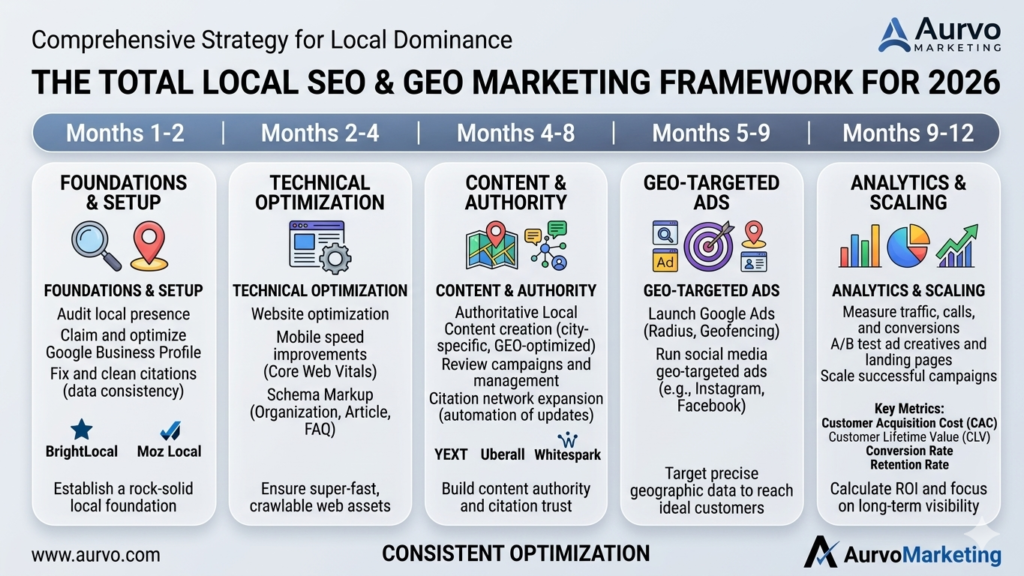
GEO Optimization Implementation Roadmap
A typical GEO strategy takes 6–12 months to show strong results.
Months 1–2
- audit local presence
- claim and optimize Google Business Profile
- fix citations
Months 2–4
- website optimization
- mobile speed improvements
- schema implementation
Months 4–8
- local content creation
- citation expansion
- review campaigns
Months 5–9
- launch Google Ads campaigns
- run social media geo ads
Months 9–12
- analyze data
- run A/B tests
- scale successful campaigns
Consistent optimization produces sustainable growth.
Real-World Results from Small Businesses
Many small businesses have achieved significant growth using GEO optimization.
Typical results include:
- 40% increase in foot traffic
- 30% growth in online orders
- 50% increase in new customers
These improvements come from combining local SEO with targeted advertising.
Final Thoughts
A strong GEO optimization strategy for US small businesses helps companies reach customers exactly when they are searching nearby.
By combining:
- local SEO
- geo-targeted advertising
- analytics tracking
- review management
businesses can significantly increase visibility, leads, and revenue.
The key is consistent optimization and focusing on the local audience most likely to convert.
Leave a Reply